If you forget things very soon and are struggling with memory issues, then don’t worry because this blog is for you. Forgetting things is a common phenomenon, and you are not alone in facing this issue. We all forget things sometimes. You have often come up with situations like when you enter into a room and forget why you came. You meet someone, and their name slips away seconds later. You promise yourself you’ll remember a task, only to regret not writing it down.
But for some people, these kinds of memory issues are very frequent, making them feel frustrated and having bad impacts on their confidence and personal growth. These issues further lead to self-doubt, which badly affects their professional growth as well.
In this Q&A guide, we’ll explore why memory lapses happen, how they can hold us back, and what we can do to improve.
Q1: Why do I keep forgetting things so easily?
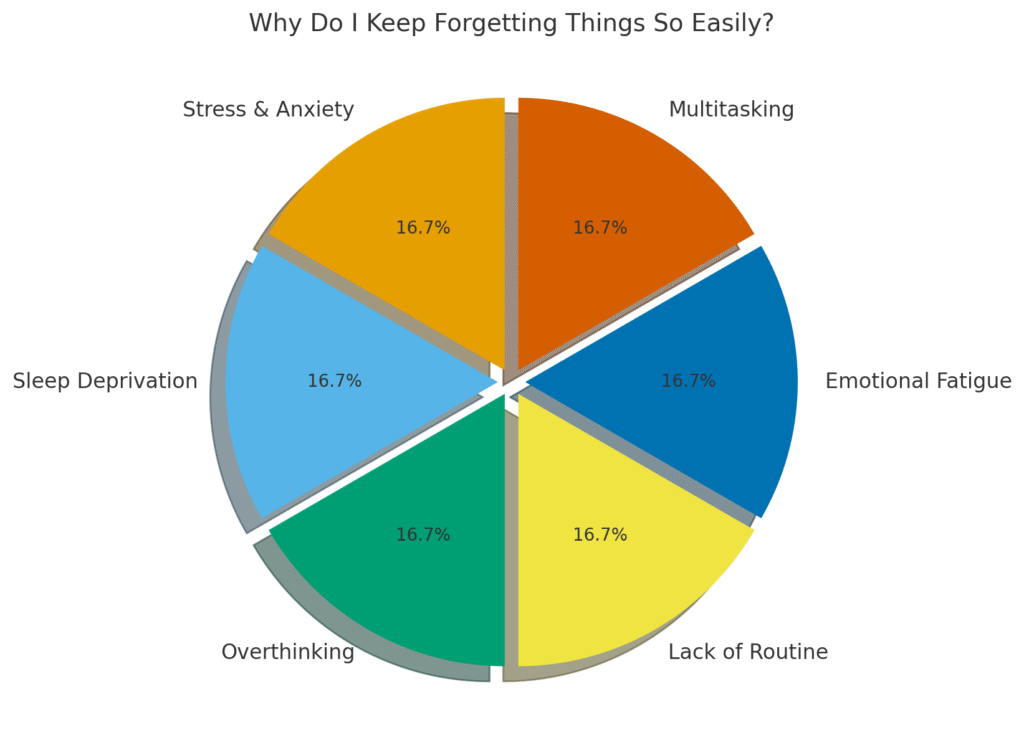
Not a single factor is responsible for memory issues. Several everyday factors weaken recall, as detailed below:
• Stress and anxiety are very common factors which affect memory. It keeps you distracted rather than focused but does not affect your intelligence.
• Sleep deprivation is the most overlooked factor which interrupts memory formation.
• Overthinking can overload the brain with too many simultaneous thoughts, which ultimately reduces focus.
• Lack of routine makes the brain skip details
• Multitasking prevents information from being stored at all.
It is quite clear from the above discussion that forgetfulness is not always a memory issue; sometimes it’s a focus issue. The brain only remembers that information which it fully absorbs, and focused play plays a key role in absorbing information.
Q2: How do memory issues impact personal growth?
Personal growth relies on accumulating knowledge, but if memory is impaired, it can hamper the growth by creating self-doubt, fear of failure and low confidence levels. Unreliability of memory affects more than daily tasks:
• It becomes harder to stay consistent with habits.
• You feel self-doubt, which leads to anxiety.
·• You may miss opportunities due to fear of forgetting.
• Impaired memory creates self-doubt, which leads to low confidence.
These issues, if persistent, can create a barrier to pursuing growth opportunities.
Q3: Are these memory issues a sign of low intelligence?
No. Absolutely not.
Many of us believe that if someone has a memory issue, he actually possesses low intelligence, but the fact is not so. Highly intelligent people also struggle with memory issues because their minds are super active. Their mind switches between different tasks sharply, and they can’t absorb much information within a short span of time. Mental stress and lifestyle habits are the main drivers of forgetfulness.
Q4: Does emotional baggage affect memory?
Yes, definitely emotional feelings/memories have great impacts on brain health. If your mind is stuck in emotional feelings of regret, shame, sadness or past trauma, your brain will not be able to store required information. Instead, your brain will focus on emotional survival instead of everyday memory. This is why people going through emotional pain feel less focused and mentally tired. Their mind is busy in protecting them instead of storing information.
Q5: Can meditation really improve memory?
Yes, and here is how:
The mind stores that information for long periods, which is fed into the brain with focus. Meditation helps in overcoming distraction and increasingfocus. It strengthens the parts of the brain responsible for:
• Emotional control
• Focus
• Memory retention
Just spending five minutes a day can quiet your mind and help you think more clearly.
Q6: When should I worry about memory problems?
Forgetting things/information is not a big deal. Forgetfulness is very common and considered harmless. However, consult a doctor if you observe any of the following:
• Frequently forgetting the routine tasks
• Getting lost in places that are already familiar to you.
• Repeating the same question frequently
• Close friends and family members observe your habit of forgetfulness because sometimes others notice patterns before you do.
Don’t hesitate to consult with doctors because they can guide you on whether your issue is normal or needs work. Early evaluation is always better than waiting if you’re worried.
Q7: Are there any online tests or apps that can help me check whether I might have a memory issue?
Yes, there are a number of online tests and apps you can use to check whether you might have a memory issue. But it’s important to note that these tools are screening/assessment tools, not full clinical diagnoses.
Here are some you can try:
- MindCrowd: A free online memory & attention test (~10 minutes) backed by research.
- TestMyBrain: Offers various cognitive tests including memory-games. You can try their “Memory Games” test.
- MemTrax: A short-term memory test built for tracking over time, claimed to be trusted by doctors/researchers.
- Lumosity: A brain-training app with memory-focused games which can help you monitor your memory performance.
- NeuroNation: App for cognitive/memory exercises; more about improvement/training than pure screening, but useful.
- Human Benchmark – Visual Memory Test section: a quick web-based test of visual memory.
Q8: How can I improve my memory to support personal growth?
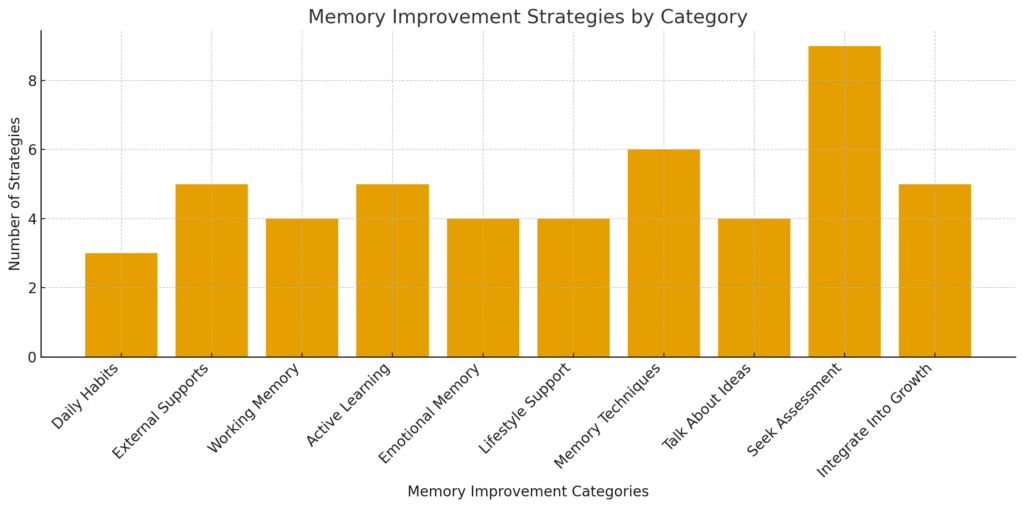
Improving your memory support personal growth because better recall strengthens learning, decision-making and confidence. Here’s a practical, evidence based guide to improving memory in ways that meaningfully enhance your overall development.
a. Build Strong Daily Memory Habits
These simple habits create a strong foundation:
- Get enough quality sleep
- Reduce multitasking
- set routines and structure
b. Use External Memory Supports
These don’t weaken your memory, they free it up so you can learn more effectively.
- Journaling (daily or weekly)
- To-do apps or planners
- Setting reminders
- Using calendars
- Keeping notes during conversations
This creates space for deeper thinking and better long-term memory.
c. Strengthen Working Memory
Working memory is the “mental workspace” you use for reasoning, problem solving, and learning.
Try:
- Dual n-back apps
- Memory card games
- Apps like NeuroNation, Peak, or Lumosity
- Mental math practice
Just 10–15 minutes a day can help.
d. Learn Actively (Not Passively)
Active learning helps memory “stick.”
Techniques:
- Summarize what you learn in your own words
- Teach the concept to someone else
- Create small quizzes for yourself
- Break information into chunks
- Review at spaced intervals (spaced repetition)
Tools like Anki or Quizlet make this easy.
e. Improve Emotional Memory
Your emotions and memory are linked. Strengthening this connection helps with personal development.
Methods:
- Mindfulness (helps you notice experiences more vividly)
- Reflective journaling
- Therapy (for trauma-related memory issues)
- Practicing emotional labeling
Greater emotional clarity leads to stronger memory which ultimately results in more meaningful growth.
f. Support Memory Through Lifestyle
Memory is biological, and lifestyle matters.
Focus on:
- Nutrition: More omega-3s, green leafy veggies, berries, nuts
- Exercise: 30 minutes of moderate exercise boosts hippocampal function
- Hydration: Even mild dehydration impacts recall
- Stress reduction: Meditation, slow breathing, grounding techniques
Stress hormones directly disrupt memory pathways — reducing stress is like removing “brain fog.”
g. Use Memory Techniques (Mnemonic Devices)
Powerful shortcuts for better recall:
- Acronyms
- Storytelling
- Visualization
- Method of Loci (“memory palace”)
- Rhyming structures
- Chunking information
These help especially with names, lists, and concepts.
h. Talk to People About Your Ideas
Conversation reinforces memory. Sharing what you learn:
- cements long-term recall
- deepens understanding
- improves confidence
- strengthens communication skills
All of these support personal growth.
i. If Memory Issues Are Significant, Seek Assessment
If you struggle with:
- daily forgetfulness
- losing track of conversations
- difficulty recalling recent events
- focus issues
- brain fog
…a professional evaluation can identify whether it’s:
- stres
- anxiety
- depression
- sleep problems
- nutritional deficiencies
- or something else
Addressing the root cause often brings major improvements.
j. Integrate Memory Work Into Your Growth Path
Improving memory isn’t just about recall, it’s about improving:
- self-awareness
- reflection
- learning capability
- emotional resilience
- overall productivity
Memory and personal growth reinforce each other.
Final Thoughts
If you feel like your memory is holding you back in life, remember this:
- Your brain is capable of growth.
- Memory can be strengthened.
- Focus can be rebuilt.
- Self-belief can return.
Personal development doesn’t require a perfect memory. It requires patience, awareness, and small consistent steps. If you start today, even small improvements will begin to show.
References
https://www.nia.nih.gov/health/brain-health
https://www.webmd.com/brain/memory-loss
https://www.mayoclinic.org/diseases-conditions/alzheimers-disease/in-depth/memory-loss/art-20046326
https://www.health.harvard.edu/mind-and-mood/forgetfulness-7-types-of-normal-memory-problems
https://www.cuh.nhs.uk/patient-information/managing-memory-problems
https://www.vinmec.com/eng/blog/memory-loss-in-young-people-what-are-the-causes-en
FAQs
What are the signs of a memory disorder?
These include:
mood changes.
memory loss.
difficulty concentrating.
finding it hard to carry out familiar daily tasks, such as getting confused over the correct change when shopping.
struggling to follow a conversation or find the right word.
being confused about time and place.
What is 75% of your brain?
About 75% of the brain is made up of water
This means that dehydration, even as small as 2%, can have a negative effect on brain functions. Dehydration and a loss of sodium and electrolytes can cause acute changes in memory and attention.